

A chargeback occurs when a cardholder disputes a transaction directly with their bank, which initiates a reversal of the funds pending the outcome of the dispute. Chargebacks cannot be fully prevented — any cardholder can file one at any time, for any reason. What matters is being in the best possible position to dispute one when it occurs.
What Happens When a Chargeback Is Filed
When a chargeback is received, Fullsteam will notify you with the full details of the dispute and a deadline to respond with supporting evidence. The funds in question are held pending the outcome.
- Each chargeback carries a $25 fee, regardless of the outcome.
- You will have a set window to submit your evidence — missing this deadline forfeits your ability to dispute the chargeback.
- Written communication related to the transaction is valid evidence. Call transcriptions are also acceptable. Audio and video recordings are not accepted as evidence.
Tools That Support Your Case
LA Pay provides several built-in tools that generate verifiable evidence relevant to chargeback disputes. Using these consistently strengthens your position before a dispute ever arises.
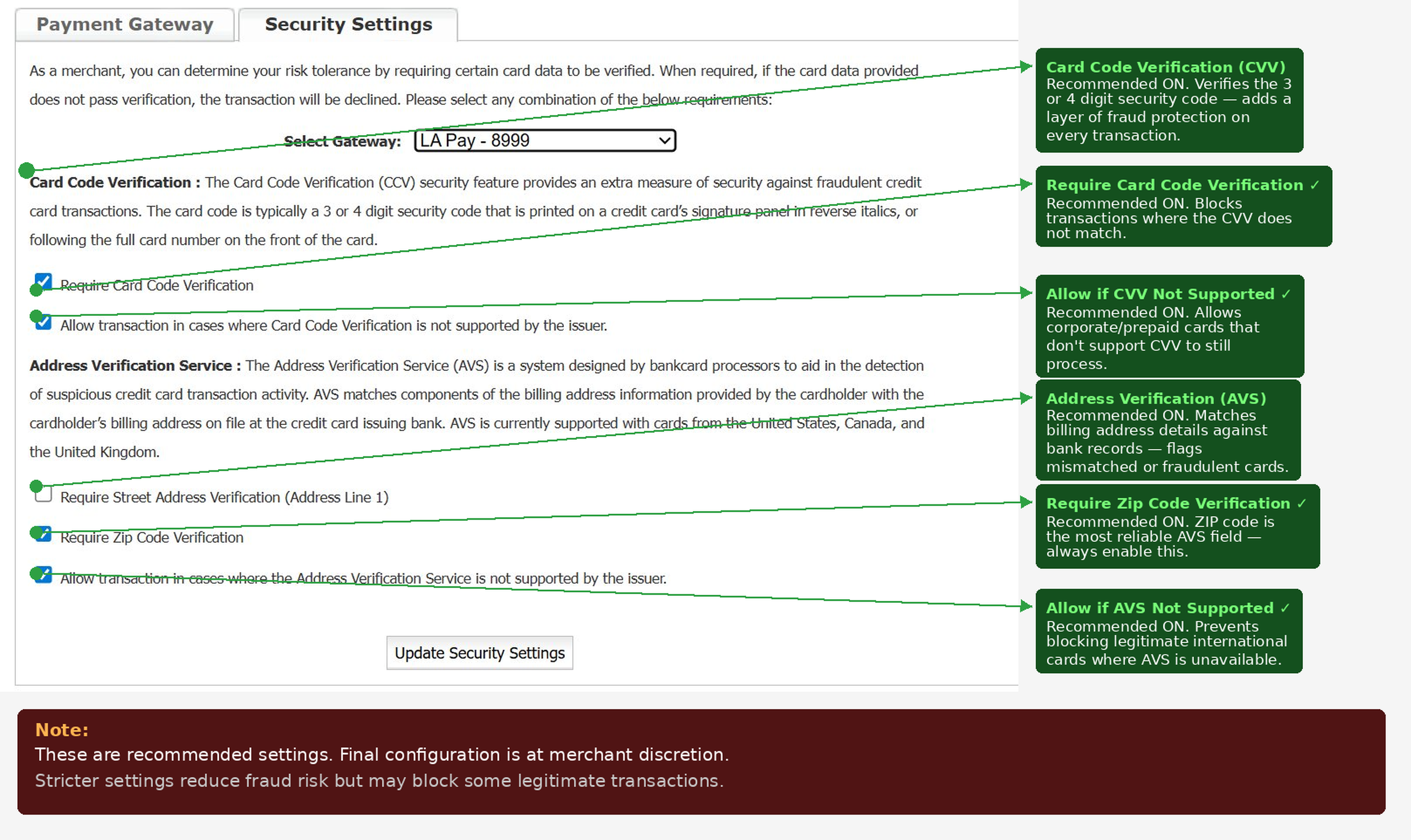
- AVS & CVV Responses — Stored on every transaction in MerchantTrack. Confirms whether the card information matched at the time of processing. To configure your AVS and CVV settings, navigate to My Office > Payment Gateway > Security Settings.
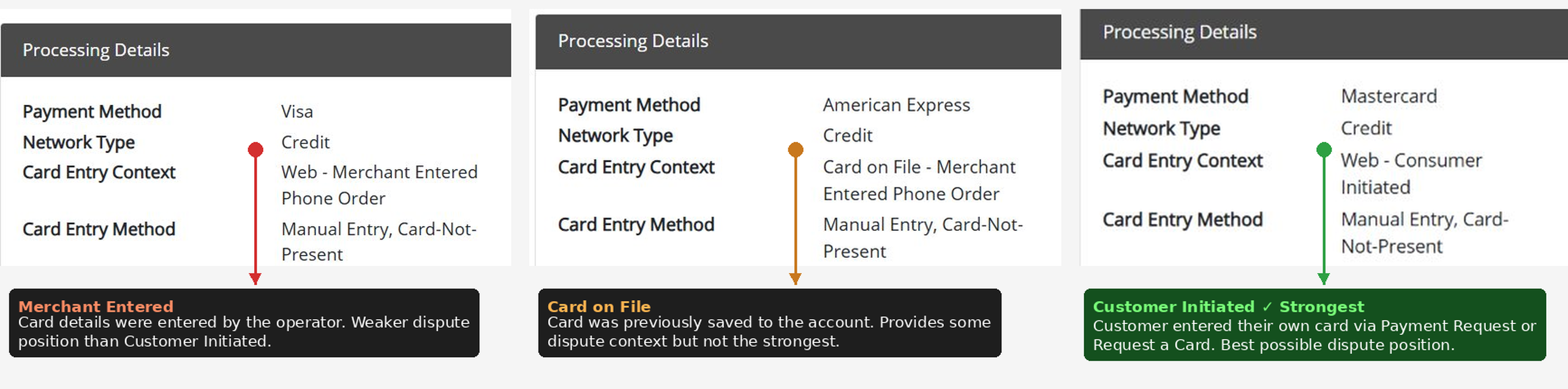
- Card Entry Context — Every transaction records how the card was entered: Card on File, Merchant Entered, or Customer Initiated. Customer Initiated is the strongest context in a dispute and is established when the customer enters their own card details via Payment Request or Request a Card. You can view the Card Entry Context on any transaction in MerchantTrack > Transaction Details > Processing Details.
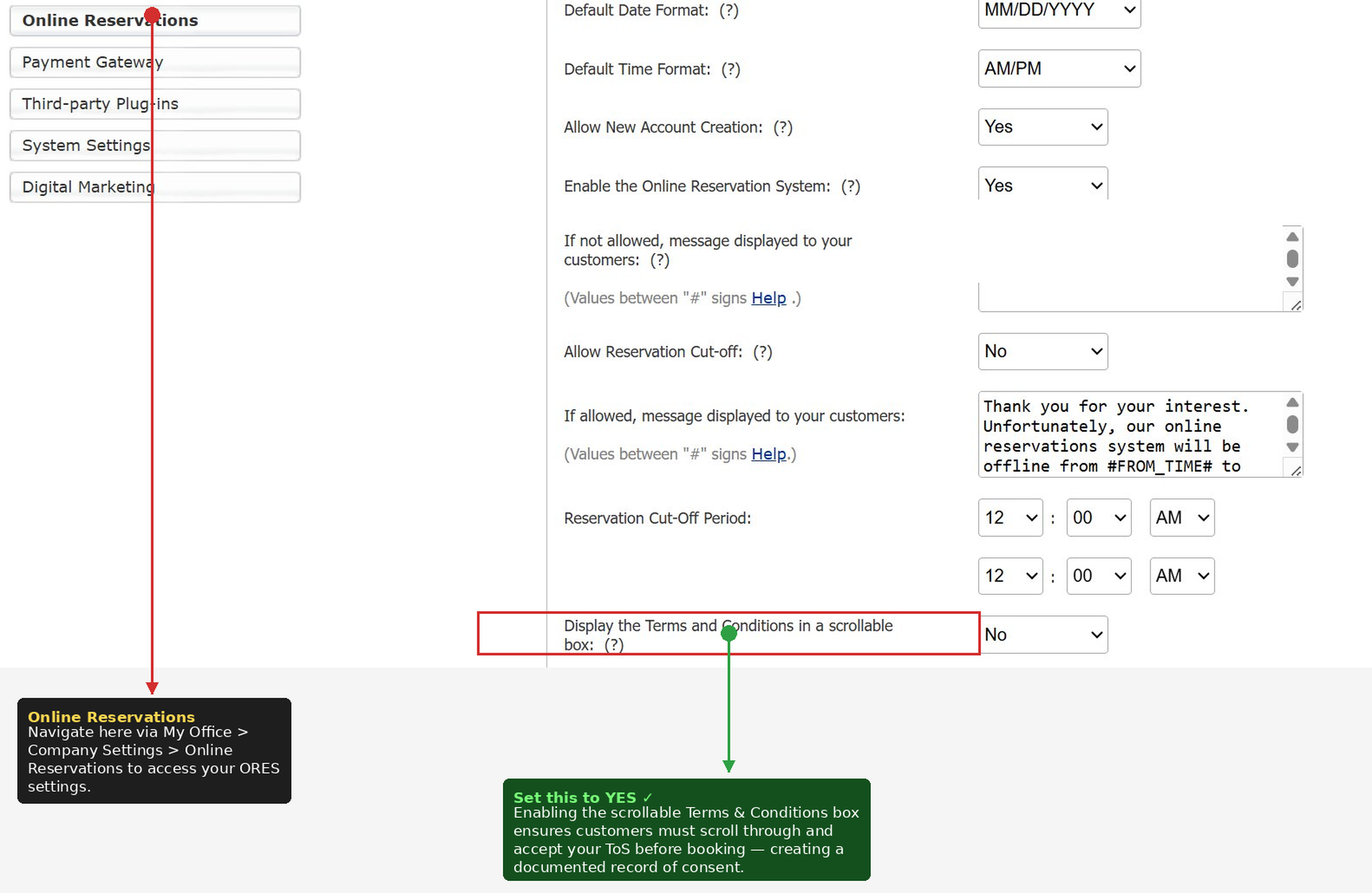
- ORES Terms of Service — Enabling a ToS checkbox in ORES creates a documented record that the customer accepted your terms and authorized the charge at the point of booking. To enable this, navigate to My Office > Company Settings > Online Reservations and set Display the Terms and Conditions in a scrollable box to Yes.
- Addons Credit Card Capture (CCC) — An optional module that captures IP address, browser information, signature, government ID, and ToS acceptance for maximum documentation at the point of card entry.
Best Practices
The most effective way to handle chargebacks is to build a strong paper trail before they happen.
- Always present and obtain Terms of Service acceptance before processing a payment. Processing a card before ToS have been accepted significantly weakens your position in a dispute.
- Use Payment Request or Request a Card when possible to establish Customer Initiated status.
- Enable AVS and CVV settings to add a layer of verification at the time of card entry.
- Keep written records of any communication with the customer related to the transaction.
- A note on submitting evidence: The person reviewing your dispute understands payment processing, but will have no knowledge of your business or the black car and transportation industry. When putting together your response, explain the context of the transaction clearly — what the service was, when it was booked, and how the customer authorized it. Be specific, leave nothing to assumption, and avoid industry jargon that may not translate outside of transportation. A clean, well-organized submission will always outperform a detailed but confusing one.
For assistance with a chargeback or questions about your dispute options, contact Limo Anywhere Support. When reaching out, please have your MID and the relevant transaction details available.